 Image 1 of 1
Androids DO Dream: Dr Oli’s Mental Health Journey
What does psychosis feel like from the inside?
What does care look like when you are frightened, medicated, restrained—and trying to make sense of a world that no longer behaves as expected?
And what happens when the same person later returns as a member of staff, and then as a researcher?
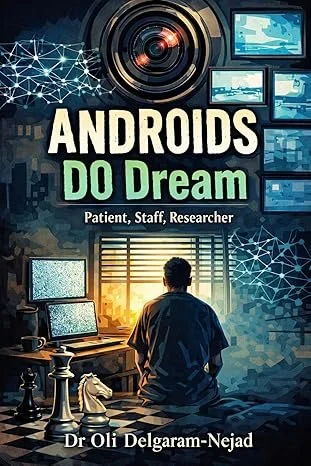
Androids DO Dream is a first-person account of psychosis and mental health care told from three intersecting perspectives: patient, healthcare assistant, and academic researcher. Drawing on podcast transcripts and lived experience, Dr Oli Delgaram-Nejad traces two episodes of psychosis and the long, uneven path of recovery that followed—not as a story of breakdown and cure, but as an exploration of meaning, fear, credibility, and humanity.
The book takes readers inside A&E, acute psychiatric wards, and PICU; into experiences of delusion, restraint, medication, and insight; and later into the quieter challenges of living openly with a diagnosis of schizophrenia. Along the way, it reflects on stigma, autonomy, occupational therapy, emotional regulation, and the subtle ways mental illness reshapes how a person is listened to and believed.
Written in clear, accessible language and grounded in ethical restraint, Androids DO Dream does not romanticise psychosis, nor does it reduce it to symptoms alone. Instead, it asks difficult questions: how people make meaning under extreme distress, how systems balance care and control, and what is lost when lived experience is treated as noise rather than knowledge.
This book is for:
people who have experienced psychosis or severe mental distress
families and carers seeking understanding rather than reassurance
mental health professionals reflecting on practice
researchers interested in language, meaning, and lived experience
Above all, it is a book about remaining human in systems that often treat distress as malfunction—and about why listening, carefully and humbly, still matters.
Androids DO Dream: Dr Oli’s Mental Health Journey
What does psychosis feel like from the inside?
What does care look like when you are frightened, medicated, restrained—and trying to make sense of a world that no longer behaves as expected?
And what happens when the same person later returns as a member of staff, and then as a researcher?
Androids DO Dream is a first-person account of psychosis and mental health care told from three intersecting perspectives: patient, healthcare assistant, and academic researcher. Drawing on podcast transcripts and lived experience, Dr Oli Delgaram-Nejad traces two episodes of psychosis and the long, uneven path of recovery that followed—not as a story of breakdown and cure, but as an exploration of meaning, fear, credibility, and humanity.
The book takes readers inside A&E, acute psychiatric wards, and PICU; into experiences of delusion, restraint, medication, and insight; and later into the quieter challenges of living openly with a diagnosis of schizophrenia. Along the way, it reflects on stigma, autonomy, occupational therapy, emotional regulation, and the subtle ways mental illness reshapes how a person is listened to and believed.
Written in clear, accessible language and grounded in ethical restraint, Androids DO Dream does not romanticise psychosis, nor does it reduce it to symptoms alone. Instead, it asks difficult questions: how people make meaning under extreme distress, how systems balance care and control, and what is lost when lived experience is treated as noise rather than knowledge.
This book is for:
people who have experienced psychosis or severe mental distress
families and carers seeking understanding rather than reassurance
mental health professionals reflecting on practice
researchers interested in language, meaning, and lived experience
Above all, it is a book about remaining human in systems that often treat distress as malfunction—and about why listening, carefully and humbly, still matters.